For every heart seeking today's Israel.
October 1945: Building Masu’ot Yitzhak
Building A Jewish Presence in Gush Etzion
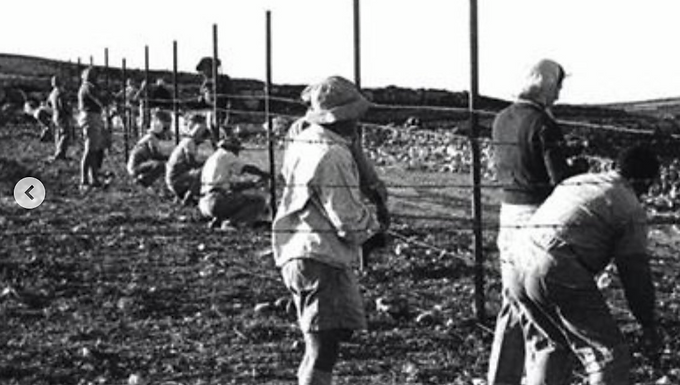
Beacon of Resilience: The Story of Masu’ot Yitzhak
In October 1945, a group of Holocaust refugees in their early twenties (having escaped pre-war Hungary, Czechoslovakia, and Germany) gathered in the rugged Judean Mountains between Jerusalem and Hebron to establish Kibbutz Masu’ot Yitzhak. They took on the harsh mountain terrain to plant orchards, build homes, and establish a living beacon (massua) in memory of the destroyed Jewish communities of Europe.
A historical photograph captures a pivotal moment: the young pioneers gathering to welcome delegates from the World Mizrachi movement and formally name their settlement after Rabbi Yitzhak HaLevi Herzog, Chief Rabbi of Mandatory Palestine.
The original community’s story took a tragic turn during the 1948 War when the Gush Etzion bloc fell to the Arab Legion. Following the massacre at neighboring Kfar Etzion, the founders were captured and held as prisoners of war in Jordan. Upon their release in 1949, the surviving pioneers reunited near Ashkelon to re-establish Masu’ot Yitzhak as a moshav shitufi, ensuring their legacy and the memory of their lost families endured.
Historic Milestones
October 1945: Founding in the Mountains: Holocaust survivors establish the kibbutz in Gush Etzion, naming it after Chief Rabbi Yitzhak HaLevi Herzog alongside leaders of the World Mizrachi movement.
May 1948: Defense and Captivity: Gush Etzion falls during the War of Independence; the surviving members are taken as POWs to Jordan.
1949: Renewal Near Ashkelon: Freed from captivity, the pioneers reunite to rebuild Masu’ot Yitzhak as a communal settlement along the southern coast.
Photo: Avraham Malavsky / Massu’ot Yitzhak Archive via KKL-JIK Archive & PikiWiki (Uploaded by Israel Preker)