Umm Kulthum in Haifa: between memory and identity

In 2020, Haifa’s Naming Committee approved a proposal from the Democratic Front for Peace and Equality (a leftist movement founded in 1977, called Hadash in Hebrew) to name a street after the legendary Egyptian singer Umm Kulthum. The decision highlighted her status as one of the greatest voices in Arab and Egyptian music, making her an apt figure to honor in a mixed city like Haifa, a city often described as a model of Jewish-Arab coexistence. This proposal sparked a heated debate in Israeli society, raising broader questions about memory, identity, and coexistence - questions that this article will explain in detail.
Street Names and Urban Narratives
Street names are not just practical signposts; they tell the story of a city. In Israel, many streets reflect a Zionist narrative shaped during the country’s early decades, while the heritage of Arab and Middle Eastern cultures is often absent or underrepresented. The little that exists tends to focus on Jewish immigrants from Arab countries and their persecution, leaving the shared Arab cultural story - of Muslims, Christians, and Jews who lived together for centuries - largely unkown.
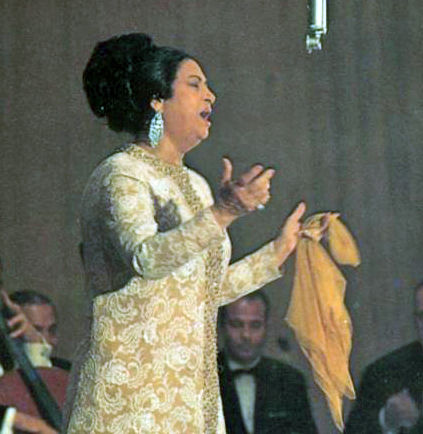
Haifa’s proposal was not unique. Jerusalem named a street after Umm Kulthum in 2012, and Ramla also considered a similar step in 2020. But while Jerusalem’s move passed quietly, in Ramla and Haifa the suggestion sparked public controversy. For some, Umm Kulthum symbolizes recognition of Arab and Palestinian culture in Israel, while for others, she is seen as politically charged due to her past statements against Israel.
In Haifa, the controversy proved decisive. After long debates, the plan to name a street after her was abandoned, leaving the city without this symbolic gesture of shared memory.
Beyond Politics: a shared cultural legacy
Despite the politics surrounding her, Umm Kulthum has long held a special place in Israeli culture, especially among Jews of Middle Eastern and North African descent. Though her political comments provoked anger, her songs of love and longing resonated across divides.
Many Jews and Israelis who grew up hearing her voice in Arabic felt she was singing for them too.
Even if her image is a matter of controversy, over the years, her music has become part of Israel’s cultural fabric. Artists like Berry Sakharof, Margalit Tzan’ani, Dikla, Nasreen Qadri, and Zehava Ben have reinterpreted her songs. Theater productions, radio programs, and dance performances have honored her memory, including:
Oum Kulthum, a play staged at the Jaffa Theater, based on the French novel Oum by Salim Nassib.
An episode of Hero of Culture on the radio station Kan Tarbut, dedicated to her life and works.
Pekroni (Remind Me), a dance performance by choreographer Orly Portal, inspired by one of her songs.
Umm Kulthum’s story
Born in a small Egyptian Delta village in 1904, Umm Kulthum - later celebrated as the “Star of the Orient” - challenged social conventions from an early age, even disguising herself as a boy to sing with her father’s troupe. Her voice, full of raw emotion, united audiences across the Arab world. Singing of love, pain, and longing, she became both a cultural icon and a bridge between people.
Nicknamed “The Voice of Egypt” and “Egypt’s Fourth Pyramid” she remains a national icon. In 2023, Rolling Stone ranked her 61st among the 200 Greatest Singers of All Time. Her funeral in 1975 drew more mourners than that of Egyptian President Gamal Abdel Nasser.
Haifa’s forgotten chapters
Haifa itself has a history closely tied to Umm Kulthum. She performed there three times in the 1930s, to audiences of both Jews and Arabs. In those years, Haifa was freer of the religious elites that shaped cities like Jaffa, Acre, and Jerusalem, and it grew as a vibrant Arab cultural center, sometimes even with a secular edge. This spirit still shapes how many Arab residents view the city today.
Yet, much of this heritage is missing from Haifa’s present-day streets. Before 1948, street names reflected Arab, Palestinian, Ottoman, and British legacies. After the establishment of Israel, many were replaced with Zionist names emphasizing rebirth, return, and liberation. Entire chapters of the city’s past were erased, and new regulations later froze the renaming of existing streets. Today, every new street becomes a site of debate over what story Haifa chooses to tell about itself.
More than a name
In this context, naming a street after Umm Kulthum is more than a tribute to a singer - it raises a deeper question for Haifa and other mixed cities in Israel: whose history should the streets reflect? Over the past century, Haifa’s street names have been rewritten more than once, each change revealing the ongoing struggle over which past to honor and which to forget.
Haifa is home not only to Jews and Palestinian Arabs, but also to Druze, Ahmadis, Baha’is, and others. Its vitality as a shared city depends on making space for all these voices.
Seen this way, the “Umm Kulthum test” is more than symbolic. It offers a chance, not just for Haifa, but for every mixed city in Israel, to move beyond narrow politics and embrace a fuller cultural story.
Article written by Einat Levi
Co-founder of ViaCity - The Center for City Diplomacy & International Relations, and Strategic Advisor for Partnership Building between Israel, Morocco, and the MENA Region.
Based on an article originally published in Haaretz (Hebrew, 2020) by Einat Levi


Comments